


Prefer to watch? This article is based on my video. Press play, or keep reading.
If you’re researching a move to San Diego, you’ve probably found a lot of conflicting information. I’ve lived here basically my whole life, and there’s a lot to love, but there are also things I don’t like. Here’s an honest look at what to expect: the weather, where to live, the cost of living, the lifestyle, jobs and traffic.
San Diego at a glance
Prices and figures are from when I made the video and change over time. Ask me for the latest numbers, or see my relocation page for more on moving here.
The weather (and what nobody tells you)
The weather is fantastic. Near the coast it’s usually in the upper 60s to upper 70s, sometimes reaching the 80s or 90s. It’s a little cooler in winter and warmer in summer, but very consistent. For a long time, most coastal homes didn’t even have air conditioning; it’s really only in the last 10 to 15 years that AC has become something people want.
Inland San Diego is different. The ocean keeps temperatures stable near the coast, so the further inland you go, the hotter the summers and the colder the winters. In places like Escondido and Poway, it can top 100 degrees a few days each summer, and winter nights can drop into the 30s and 40s. If you want stable temperatures, live closer to the coast.
The hottest months are usually August through early October, and the coldest are January and February. The one surprise for a lot of people is May and June, when the coast is often cool and gray under a blanket of marine layer. Drive 10 or 15 minutes inland and it can be sunny and much warmer. If that bothers you, live a bit further from the ocean.
Where to live: coastal vs. inland
The kind of lifestyle you want matters a lot, because San Diego has so many to choose from. Most people picture the beach communities, but those are also the most expensive. When I made the video, the median price in coastal areas was around $1.5 million, and houses alone often run $2 million to $3 million or more in places like Carlsbad, Encinitas, Del Mar and La Jolla. Everyone wants to live on the coast, so demand is higher.
The good news is that San Diego is huge, and there are a lot of great areas that cost less: Del Cerro and San Carlos in East San Diego, pockets of Oceanside, and places like Escondido. For a lot of people, especially first-time buyers, the coast is just too expensive, so you may need to widen your search inland. See where to live in San Diego on every budget.
Line up a job before you move
My biggest recommendation: have a job, or at least strong prospects, before you move. I’ve had friends move here without one, and finding work took much longer than they expected. The cost of living ate through their savings, and some only lasted five or six months. The job market is competitive, especially for entry-level roles.
The cost of living
I’m not going to sugarcoat it: San Diego is more expensive than most of the country, and only a handful of U.S. cities cost more. A few things to be ready for:
- Gas. California gas prices usually run well above the national average, often by $1.50 a gallon or more.
- Income tax. California has the highest top income tax rate in the country. If you’re coming from a state with no income tax, like Nevada or Texas, it’s a big change.
- Property tax. This one is relatively low, about 1.1% to 1.2% of the purchase price, and Prop 13 limits how much your assessed value can rise each year.
- Pay. Most jobs pay more here at nearly every level, so you’ll likely earn more, but you’ll also spend more.
Land is expensive, so homes and yards are usually smaller than people are used to. Coming from Texas or the Midwest, expect to downsize. Coming from New York or downtown Chicago, you may actually get more space. Rent is high too, and while rents have leveled off or dipped slightly lately, that doesn’t undo how much they’ve gone up.
Wildfires and home insurance
If you buy, home insurance has gotten more expensive, largely because of wildfire risk. Fire danger peaks in the fall, when everything is dry and strong Santa Ana winds blow through. A lot of San Diego is considered high fire risk, and homes in those areas can be harder and more expensive to insure. The only real way to know your premium is to get quotes during escrow, so start early. I can tell you whether a home is in a high fire hazard zone before you make an offer.
On the flip side, San Diego real estate has appreciated as well as almost anywhere in the country over the long run, and it’s been a great investment for a lot of owners, us included.
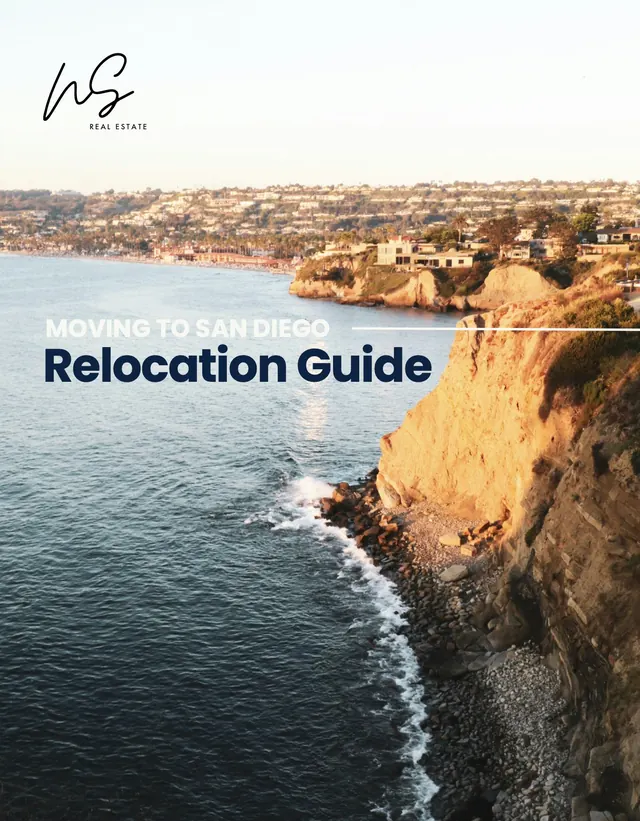
Get my free Moving to San Diego guide
The lifestyle is what you’re paying for
A big part of what you pay for here is the lifestyle, more than the house. Being outdoors and active is part of the culture: hiking, biking, running, the gym, yoga. With about 70 miles of coastline, you can surf, paddleboard, play beach volleyball or take the dog to the beach, all year round. People build their routines around being outside, from weekend pickleball leagues to outdoor CrossFit and beach yoga, and kids can play sports all year.
There are great hikes and trails like Torrey Pines State Natural Reserve and Sunset Cliffs. The mountains are about an hour east around Julian and Mount Laguna, and when a good storm comes through, we’ll make a day trip to Big Bear, about two and a half to three hours away, to go snowboarding. The beach, the mountains and the desert are all within a few hours, which very few places in the country can say.
That lifestyle has a real effect on your health. You walk more, get sunlight all year and aren’t stuck indoors for months, so there’s less of a seasonal slump. Especially with kids, being outside and in sports year-round makes a big difference.
Healthcare and biotech
One thing people don’t talk about enough is healthcare. San Diego has major health systems like UC San Diego Health, Scripps and Sharp, with top specialists and research programs, and UC San Diego is one of the leading research universities in the country. If you have kids or are getting older, that matters.
Those systems, plus a huge biotech industry, attract high-income professionals. San Diego is often ranked the third-largest life sciences hub in the U.S., behind Boston and the San Francisco Bay Area, with companies like Illumina, Dexcom and Thermo Fisher employing thousands of people, much of it around La Jolla and Sorrento Valley. If you work in the industry, there’s a lot of opportunity, and these well-paying jobs help keep the housing market stable.
Traffic, cars and parking
If you’re coming from Chicago or LA, the traffic won’t faze you. If you barely use a car now, it’s a big change. Everything is spread out and mostly suburban, so outside of downtown you’ll drive almost everywhere. There is public transit, but most people don’t rely on it, and nearly everyone I know has a car.
Rush hour gets heavy, and if you live far from work you can easily spend a couple of hours a day commuting, which gets old fast. Outside rush hour and on weekends it’s not bad. Reverse-engineer where you live: think about work, the grocery store, the gym and your kids’ school. And in central San Diego, parking is getting tougher, so make sure you have a designated spot.
If you have questions about anything else in San Diego, or want help figuring out whether moving here makes sense for you, reach out anytime. Moving from out of state? Start with how to buy a house in San Diego from out of state, and see what’s happening in the San Diego housing market.
Common questions
Is San Diego a good place to live?
For a lot of people, yes. The weather, outdoor lifestyle, beaches, healthcare and job opportunities are hard to beat. The trade-offs are a high cost of living, expensive housing and insurance, and traffic if you live far from work.
Is it cheaper to live inland in San Diego?
Usually, yes. Coastal communities are the most expensive. Areas like Del Cerro, San Carlos, Escondido and parts of Oceanside cost less, though inland areas get hotter summers and colder winter nights.
What is June Gloom in San Diego?
In May and June, a marine layer often keeps the coast cool and overcast, while areas just 10 to 15 minutes inland can be sunny and much warmer.
Do you need a car in San Diego?
Almost always. San Diego is spread out and mostly suburban, and outside of downtown most people drive everywhere. Try to live close to work to keep your commute short.

Nenad Sapungin is a San Diego native and real estate agent who helps people buy, sell and relocate across San Diego County.