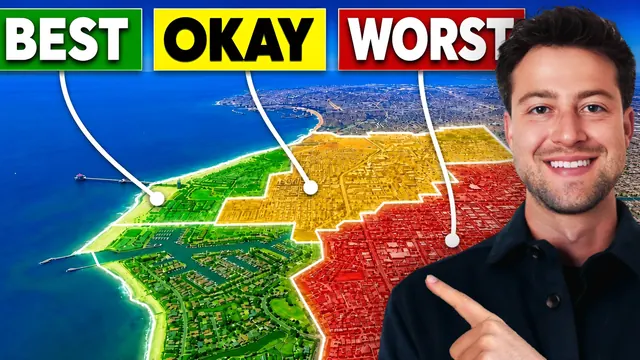

Prefer to watch? This article is based on my video. Press play, or keep reading.
Buying a house in San Diego when you live in another state can feel impossible. You’re learning a new city, comparing prices that may look nothing like home, and trying to make a huge decision from far away.
Here’s the exact step-by-step process I walk my out-of-state buyers through, so you can avoid the big mistakes, plus a few important tips on timing at the end.
The process at a glance
1 Get pre-approved and shop lenders 2 Figure out where you want to live 3 Tour homes without flying out 4 Write a strong offer 5 Close escrow remotely When to start looking1. Get pre-approved and shop lenders
Most people need financing, and this step gets overlooked more than it should. Getting pre-approved tells us exactly what price range you qualify for.
Then we shop around. Lenders don’t love this, but I don’t work for the lender or the bank, I work for you. Different lenders offer different rates, fees and even loan programs, so comparing a few is how you get the lowest rate and the lowest fees.
A rough rule of thumb: most lenders allow about 45% of your pre-tax income to go toward your total monthly payment, including property taxes, insurance and any HOA fees. If you make about $20,000 a month and have no other debts, that’s roughly a $9,000 monthly payment. With $1,000 a month in car payments, it drops to about $8,000.
Pick a lender who’s proactive, communicates well and gets you a great rate, because they’re a huge part of the transaction. I work with a couple of excellent local lenders and can connect you. They’ll walk you through credit scores, income, down payments and interest rates.
2. Figure out where you want to live
This is the fun part, and for out-of-town buyers it’s usually the hardest. It’s also where a lot of people make mistakes.
San Diego isn’t one big city that’s the same everywhere. It’s a huge area with completely different markets: coastal towns, more urban neighborhoods near central San Diego, and inland pockets. So we start with your lifestyle:
- Do you want top-rated schools?
- Do you want to be close to the beach?
- How far are you willing to commute?
Answering those narrows your options fast. I was born and raised in San Diego, so I know the different pockets and lifestyles well. My relocation page and area guides for places like Carlsbad, Encinitas, San Marcos and Poway are a good place to start comparing.
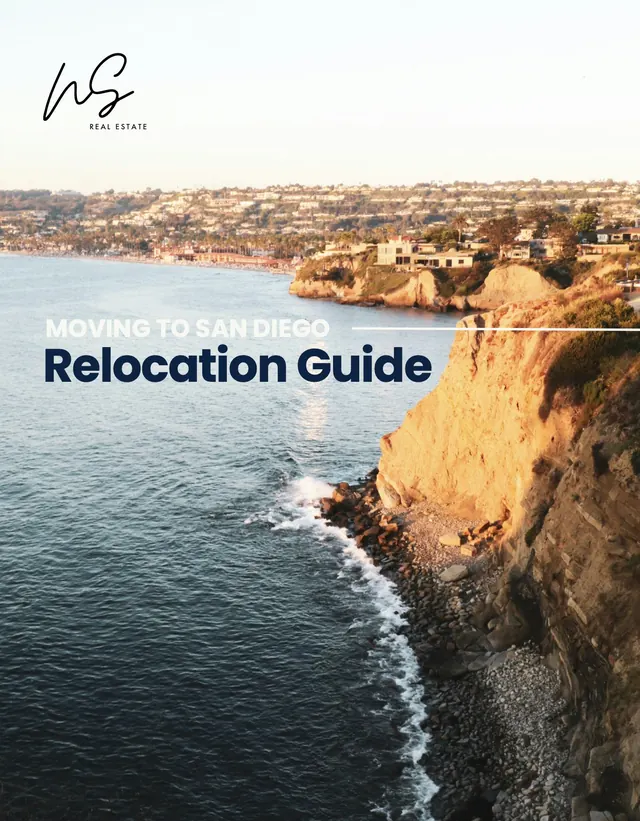
Get my free Moving to San Diego guide
3. Tour homes without flying out
Since you can’t just pop into an open house, I’ll go to any property you want to see and shoot a completely unedited video tour. I’m not just showing you the good stuff. If the neighbor’s yard is a mess, there’s road noise or something is wrong with the house, I’ll tell you. Listing photos are always different from what you see in person.
I’m not here just to sell you a house. If I walk into a property and don’t think it’s worth it, I’ll tell you to pass on it.
I’ll also show you the neighborhood around it: grocery stores, gyms, coffee shops, hiking trails, all the things that will be part of your daily life. And I don’t wait for you to send me listings. I proactively send you new ones and help you narrow down the right fit. If something great hits the market, I can usually get there the same day and give you a full walk-through.
4. Write a strong offer
Finding the right house is one thing. Getting your offer accepted in a competitive market like San Diego is another. A strong offer comes down to four parts.
Purchase price. Price usually moves opposite to days on market. If a home just listed, had 30 showings and got three or four offers, the seller probably won’t accept anything under asking, and you may need to offer more. If it’s been sitting for three or four weeks, we have a much better shot at a lower price. And the highest offer doesn’t always win. Sometimes it’s the cleanest offer, with the best financing or the best timeline for the seller.
Earnest money deposit. This is usually 1% to 3% of the purchase price, and it goes toward your down payment, so it’s not an extra fee. It’s refundable only if you cancel within your contingency periods. Most offers have three:
| Contingency | Typical length | Cost |
|---|---|---|
| Inspection | About 7 to 10 days | About $500 to $800, paid by you |
| Appraisal | About 12 days | About $700, paid by you |
| Loan | About 12 to 17 days | Part of your closing costs |
Always get a home inspection, so you know the home’s exact condition. If something major comes up, we have three options: ask for a lower price, ask for a credit toward your closing costs, or ask the seller to fix it. If something comes up that we can’t work out, you can cancel within your contingency periods and get your full deposit back. The only money you won’t get back is what you paid for the inspection and appraisal.
Closing costs. These are about 1% to 3% of the price, and they surprise most buyers because they’re separate from your down payment. If your down payment is $50,000 and closing costs are about $15,000, you need about $65,000 at closing. They cover things like lender fees, escrow and title, and prepaid property taxes and insurance. Depending on the home and the seller, we can often ask for a credit toward your closing costs to lower the cash you need.
5. Close escrow remotely
Escrow takes about 21 to 30 days with financing, and as little as about 10 days with a cash offer. This is where having the right agent really matters. Miss a deadline or mishandle something, and that’s how deals fall apart.
I coordinate with your lender, escrow and title, and the listing agent, and keep you updated so you always know where things stand. You can sign everything remotely, and a mobile notary can handle your closing documents, so you don’t have to fly in for every step.
When to start looking
Even though closing only takes about 30 days, I recommend you start searching two to three months before you need to move. If you need to be here by August, you want to find a house by early July, and finding the right one can take a couple of months. So start looking at the beginning of May.
On a tighter timeline, with only a month or two? We can still make it happen. You just won’t have the luxury of being super picky, and you’ll be choosing from what’s on the market right now.
Common questions
Can I buy a house in San Diego without seeing it in person?
Yes. I do unedited video tours of the home and the neighborhood, offers are signed electronically, and a mobile notary can handle your closing documents, so you don’t have to fly in for every step.
How much income do I need to buy a house in San Diego?
As a rough rule of thumb, most lenders allow about 45% of your pre-tax income to go toward your total monthly payment, including taxes, insurance and HOA fees, minus any other debts. Getting pre-approved tells you your exact number.
How much are closing costs in San Diego?
Usually about 1% to 3% of the purchase price, on top of your down payment. Depending on the home and the seller, we can often negotiate a seller credit toward them.
How long does it take to buy a house in San Diego?
Escrow takes about 21 to 30 days with financing, or about 10 days with cash. I recommend starting your search two to three months before you need to move.
How much is the earnest money deposit?
Usually 1% to 3% of the purchase price. It goes toward your down payment and is refundable if you cancel within your contingency periods.

Nenad Sapungin is a San Diego native and real estate agent who helps people buy, sell and relocate across San Diego County.